

ECSA Chemicals experts are always available to assist you with swimming pool water care. Below is an in-depth analysis of total hardness, carbonate hardness, and pH value.
OUR PRODUCTS
SULFURIC ACID 38% TECHNICAL - MP 016675
Total Hardness
Total hardness is a value related to the sum of calcium and magnesium ions (which are responsible for hardness).
Hardness (CaO) is measured in degrees °dH (German hardness). 1 degree °dH corresponds to 10mg/l of calcium oxide (CaO).
The unit of measurement for hardness is also expressed in mmol/l.
- 1 °dH corresponds to 0.18 mmol/l
- 1 mmol/l corresponds to 5.6 °dH
Based on their total hardness, water types are classified as follows:
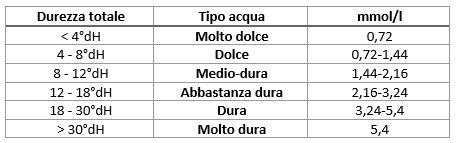
Maximum hardness is one of the reasons why pool water must be changed every year. The concept of "hardening" refers to water becoming harder over time. Maximum hardness is caused by the evaporation of pure water from the surface and the addition of supplementary water containing various substances that enrich the water. The higher the water hardness, the greater the chance of limescale deposits and water cloudiness. This phenomenon increases significantly as the pH value rises.
Carbonate Hardness
Carbonate hardness is the portion of total hardness present in the form of bicarbonates. It is indicated in German degrees (°dH). Since the pH value in pool water depends exclusively on the combination of bicarbonates and carbon dioxide, it is advisable to measure the carbonate hardness of the pool water in addition to the total hardness to recognize pH stability.
The higher the carbonate hardness, the greater the amount of pH correctors needed to adjust the value.
Waters with low carbonate hardness have only limited buffering capacity and can resist pH-changing influences with very little resistance, meaning the pH value is unstable and subject to significant variations.
In this context, carbonate hardness is also defined as "acidity" or "alkalinity." It is indicated in mmol/l or mol/m³.
Acidity x 2.8 = Carbonate hardness OR Carbonate hardness / 2.8 = Acidity
The carbonate hardness of the pool water must be at least 2 German degrees (0.7 mmol/l). If this minimum content is not exceeded, a pH stabilizer must be added.

pH Value
The pH value is the relative measure of the acidic or alkaline reaction of water on a scale from 0 to 14. At a pH value of 7, water is defined as neutral.
The ideal pH value for pool water is between 7.0 and 7.4.
pH values above 7.4 cause the following:
- Skin and eye irritation
- Increased risk of limescale precipitation
- Significant reduction in the disinfecting action of chlorine
- Abnormal flocculation with aluminum-based flocculants
pH values below 7 cause the following:
- Corrosion of metal parts (including stainless steel)
- Corrosion of mortar-containing materials
- Unpleasant odors and irritation of mucous membranes
- Abnormal flocculation with aluminum-based flocculants
It is absolutely necessary to perform regular checks and set the ideal pH value between 7.0 and 7.4.
Generally, the pH value of pool water is determined by the combination of bicarbonates and dissolved carbon dioxide. The latter dissolves in water as a gas and is expelled by water movement and heat, thereby increasing the pH value.
By adding an acidity corrector, part of the bicarbonate is transformed into carbon dioxide; the pH value then drops.
Waters with significant carbonate hardness also contain a relevant amount of dissolved carbon dioxide. The pH value of such waters increases rapidly in swimming pools. With the breakdown of carbonate hardness (bicarbonates) during pH correction, the water contains fewer bicarbonates and less dissolved carbon dioxide after a while, and the carbonate hardness decreases. The amount of correctors needed for pH adjustment is reduced, increasing the time between corrections.
REQUEST A QUOTE
SULFURIC ACID 38% TECHNICAL - MP 016675
Our experts are at your disposal for questions, in-depth analysis, and consulting: